
Hydropower utilization and dams
The use of hydropower to generate electrical energy is associated with lasting changes to watercourses.
 © Wolfgang Geuke
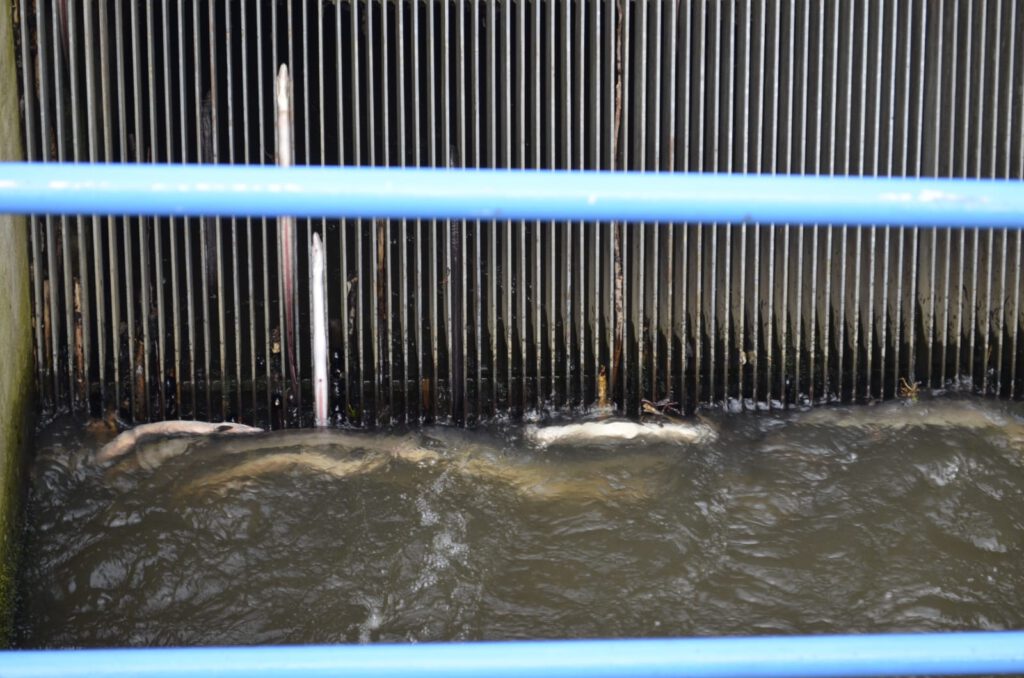
Without functioning migration aids for migratory fish, dams represent an insurmountable obstacle. This cuts them off from their spawning grounds and puts them at risk of extinction.
Young salmon and sea trout migrating downstream to the sea, and adult eels on their way to their spawning grounds in the Sargasso Sea, are among many other species that are sometimes injured or even killed by the turbines used for hydroelectric power generation. This happens at every power plant on their long journey to the sea.
 © Dieter Prehn
Weirs and other dams change the character of the affected section of water. The flow velocity drops dramatically. The oxygen content decreases and sometimes the bottom of the water becomes silted up.
For aquatic organisms that are adapted to life in a river, these sections of the water are no longer available as habitats. This leads to a drastic reduction in biodiversity and the number of fish living there. Fish passes are built to give fish the opportunity to avoid the deadly obstacle. However, many of these fish passes do not work adequately for the fish. To date, there are no technical solutions that completely avoid the harmful effects on fish.
It is therefore necessary to use the best available standard and still weigh up whether the comparatively small energy or financial benefit to an individual justifies the destruction of an entire habitat and the annihilation of numerous living creatures.
Unfortunately, hydropower from run-of-river power plants is not “green energy.”
Net and angling fishing
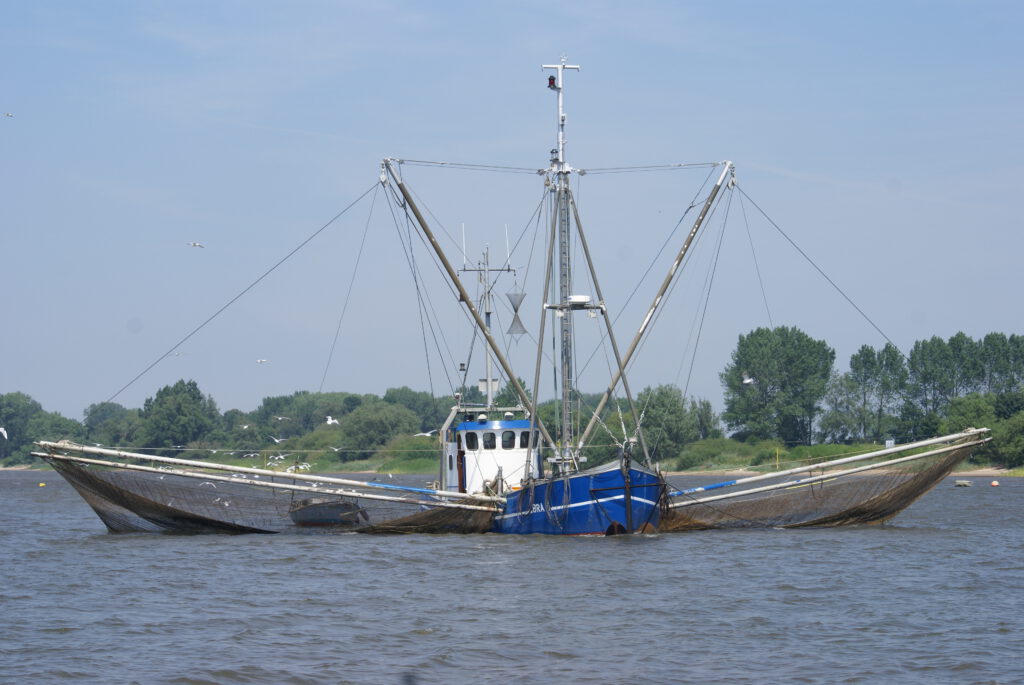
Atlantic salmon stocks in German river basins are far from being self-sustaining.
 © Stefan Ludwig
The goal of joint efforts by fishermen, anglers, and consumers must be to rebuild stocks as quickly as possible.
“Migratory Fish Without Borders” expressly supports the goal of enabling the use of salmon, sea trout, and other migratory fish stocks as a source of high-quality food.
Fish-eating birds
In addition to the numerous factors that make it difficult for fish to live and survive in our waters, there is another threat.
 © Stefan Ludwig
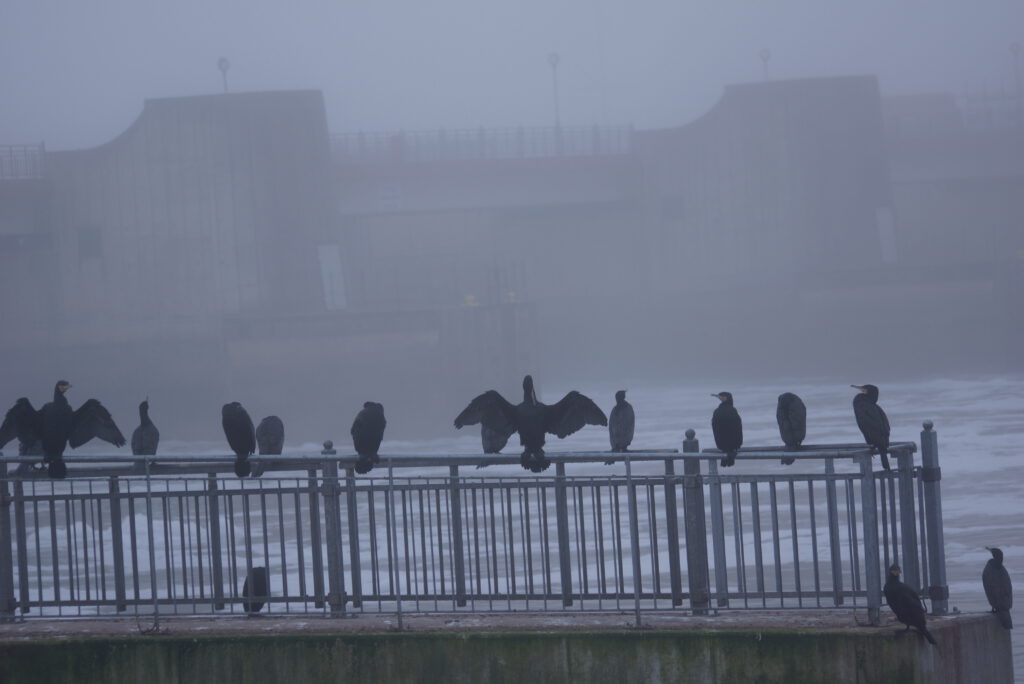
Fish-eating birds such as cormorants and goosanders have proliferated in recent decades.
Many fish species in Germany are in danger of extinction. Fish-eating birds pose a threat to fragile fish stocks.
Fish poaching
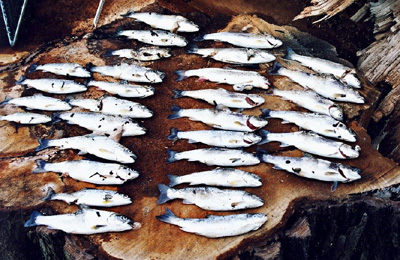
The illegal fishing of large salmonids such as salmon and sea trout using illegal methods in the vicinity of dams poses an unacceptable threat to efforts to rebuild stocks.
All means available to the state must be used to prevent these crimes. This is not a minor offense and will not be tolerated.
Water pollution
The pollution of our waters with industrial waste and domestic sewage has been significantly reduced in recent decades.
The discharge of phosphate from sewage treatment plants has been greatly reduced.
Water pollution is no longer the main obstacle to repopulation, especially for salmon. Current problems include hormone-active substances from pharmaceuticals that are found in wastewater. High sediment input and high nitrogen pollution from agricultural use are the reason for the deterioration of spawning substrates for gravel spawners such as salmon and trout in some smaller water bodies.